Earning Too Much to be Homeless. Too Little to Have a Home.
A new study puts numbers to a housing crisis forgotten behind hotel room doors — and our fellow April Ballard helped make it happen.

The 2017 film The Florida Project takes a look at an forgotten world in plain sight, just outside the “happiest place on Earth.” The Sean Baker film — which earned Willem Dafoe an Oscar nomination for Best Supporting Actor at the 90th Academy Awards — follows six-year-old Moonee and her mom as they scrape by in a budget motel in the shadow of Disney World.
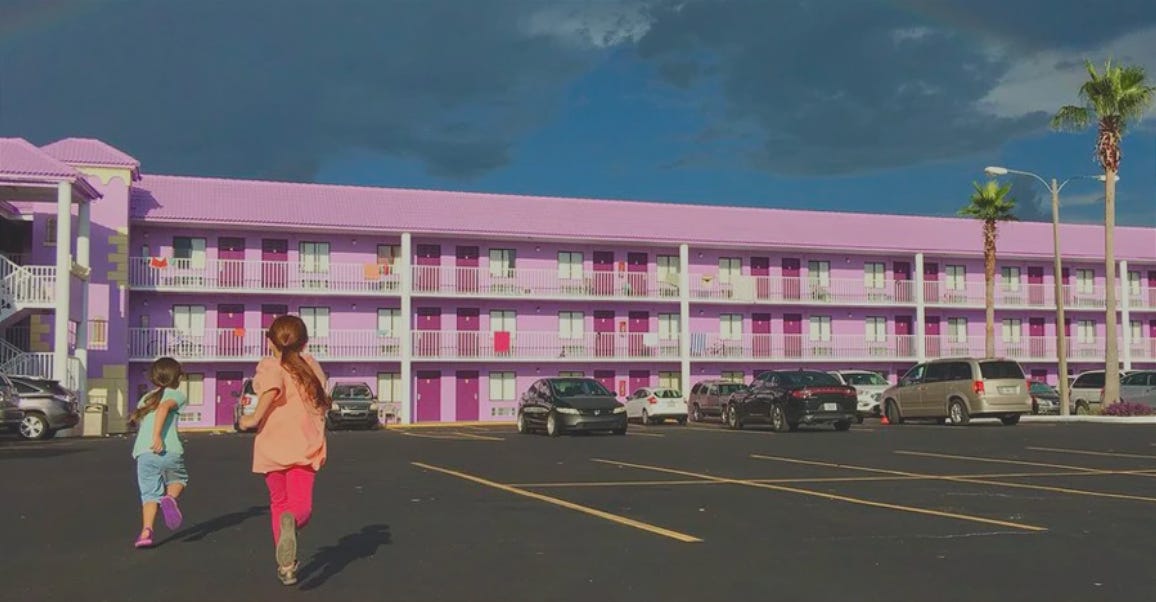
Like them, there are millions in the U.S. living in limbo: priced out of the rental market, they’re forced to stay in extended-stay hotels.
“I think The Florida Project was a really good representation of the issue,” says April Ballard, an assistant professor at Georgia State University. “And interestingly, most of the research on this has been conducted in Florida and Georgia.”
April co-leads GSU’s Center on Health and Homelessness, and is deeply aware of this hidden crisis. Earlier this year, she co-wrote the release of a landmark report documenting exactly the kind of crisis Baker portrayed: more than 4,600 people in DeKalb County, including 1,635 children, living in extended-stay hotels and budget motels because the rental market has locked them out entirely.
“This is the part of the housing and homelessness crisis that is least highlighted,” she told us.
A never-ending cycle
The people in this situation are working. In fact, her research found that
Seventy-eight percent of households surveyed had at least one person with a job
24% had someone working multiple jobs.
Problem is, they don’t make enough money to clear the bar the rental market has set. But they aren’t considered experiencing homelessness by federal definitions because they live in hotels. “The cost of [a hotel] is eating up most of people’s income, and so they then get kind of stuck in this cycle,” she explains.
In fact, the average monthly hotel cost was $1,852, actually more than the average rent of $1,789 in DeKalb County.
But a hotel room doesn’t count as a lease. You can’t build credit there, and since their income is going to pay for shelter in a hotel, they can’t save for the $3,000 upfront cost of renting an apartment. And at the federal level, they aren’t even counted as homeless — which means housing authorities relying on federal funding can’t spend money on these families.
“If you were in your car or on the street, you would be eligible,” April said. “But do you really want to sacrifice your child’s well-being and subject them to that just so you could get services?”
As a result, people are stuck in a seemingly never-ending cycle: More than 16% of residents had lived in extended-stay hotels for over five years. Another 45% for one to five years. And yet, officially overlooked and unrecognized.
Behind closed doors
To conduct the study, April and her collaborators mobilized over 50 volunteers who knocked on 3,500 doors across 42 hotels over three months.


For some of those who opened their doors to April’s team, there was palpable relief at being asked at all. Others didn’t want to talk at all. “Sometimes, within the first 10 seconds, someone would start sharing their experiences of how they ended up there,” she told us. “To bear witness to people’s hardship is, I think, really special, and a really vulnerable thing for people to be willing to do.”
Inside those rooms, 33% of residents reported mold and half reported insects or rats — conditions that drive chronic stress, respiratory illness, and infectious disease risk. And yet, complaining about any of it is its own trap. April found that in DeKalb County, when inspectors have been called to a hotel and found violations, the costs of fixing them have been passed directly to the residents. “There is a real challenge of how do you hold hotels accountable, while also making sure that those costs aren’t passed on to the people who are living there,” she said.
For families already spending 80% of their income on a room, a rent hike to cover repairs could push them out entirely — and onto the street, the very outcome they’ve been working so hard to avoid.
But April also found something she didn’t expect.
Just like in The Florida Project, where Moonee develops deep friendships with her neighbors, “there is, like, real deep community in some of these hotels that people have formed,” she said. “The demand to be resilient, but also to build community, even when you’re dealing with such hardship, was really great to see.”

A way out
April and her team point toward exits. One concrete lever: the hotel-motel tax, which generates billions annually and flows almost entirely into tourism. “People who live in hotels are probably paying the majority of those taxes, and they get no benefits from them,” April said. She argues that redirecting a share of that revenue toward housing services would be both fair and feasible.
The report also identifies a more immediate fix: one-time deposit assistance could unlock permanent housing for hundreds of families right now. And while changing the federal HUD definition of homelessness is a long fight, April sees a real opening at the state and local level, especially as federal responsibilities continue to shift downward.
The Florida Project ends with a dream sequence (Spoiler alert!): Moonee running toward Magic Kingdom, as if imagination is the only escape the film can honestly offer. It’s beautiful and devastating in equal measure.
April’s report ends differently: with a spreadsheet, a tax code, and a deposit check. With the argument that a few targeted policy fixes could move hundreds of families out of hotel rooms and into stable housing.
Somehow, that feels more hopeful than the dream.
April Ballard is an Assistant Professor at Georgia State University School of Public Health and co-leads the GSU Center on Health and Homelessness. She is a 2025 Agents of Change Fellow in Residence. You can read the full DeKalb County report here.
There Is No Place For Us was an excellent book on this topic. It follows families in Atlanta that are stuck in this in between area where they're not considered "homeless enough" to get services.
I fear this problem will only get worse as housing costs continue to rise and social services get cut.