What spending a day in Ohio with 30 strangers taught me about the future of environmental public health
It's less about data and more about engaging everyday people.


This essay was written by Dr. Ami Zota, founder and director of Agents of Change and Professor of Environmental Health Sciences at Columbia University Mailman School of Public Health. A Harvard-trained environmental health scientist, Dr. Zota's research advances environmental justice by linking toxic exposures to reproductive and children's health — and translating that science into policy and action.
In 2025, my professional world was on the verge of collapsing.
The new administration launched a fierce attack against public health. We saw the dismantling of important federal public health programs such as the Office of Research and Development, and the Office of Environmental Justice at the US EPA. Nearly 100,000 scientists left the federal government. The Federal government froze or cancelled $400 million in research funding for Columbia University, my institutional home. I was not spared: I lost all my federal grants. In my classroom and office, I saw students questioning the value of a career in environmental public health. I also saw how society at large increasingly questioned the value of higher education altogether.
It was an existential crisis. I felt anxious, defeated, and nervous about the future.
So I began to ask myself, how did we get here? How is there so much distrust in public health and higher education? And, more importantly, what can we do about it?
As I looked for answers and fresh voices, I stumbled upon a podcast called “Why Should I Trust You?”, where journalists, clinicians, and scientists meet supporters of the Make American Healthy Again movement and mainstream medical experts to examine the declining trust in public health. I was immediately hooked. So I did the next logical thing: I started mildly stalking one of the hosts, Brinda Adikari, on LinkedIn. After learning that she also lived in New York and even shared a few mutual connections, I sent her an invite. To my fangirl delight, she accepted! We set up a phone call under the most logical circumstances – while she was walking home from grocery shopping.
During the call, I shared my enthusiasm for the show, but also my belief that they could better tackle my area of expertise and a top priority for MAHA: everyday toxic chemicals like PFAS and phthalates. She appreciated my feedback and even invited me to collaborate on a podcast episode. That was Fall 2025. Then life got busy. But in March 2026, I got an email from her asking me to spend a day and a half in Columbus, Ohio, surrounded by MAHA advocates and public health experts. I took a leap of faith and said yes.
A meeting unlike any I’ve attended
This was a tiny event: only 30 people were invited. The organizer, The States Forum, wanted to bring together diverse voices to think through how states can address the health problems that federal gridlock is leaving on the table. We would focus on glyphosate and chemicals in food, chemical accidents like the East Palestine train derailment, and data centers — issues many Americans across political lines identify as important, but have been poorly handled at the federal level.


As I received more information about the meeting, I began questioning my decision to go. I wasn’t going to know anyone. What would I do if a shouting match broke out over whose facts were more credible? Imposter syndrome kicked in. But I resolved that my main role was to listen and to be an empathic human.
When I finally met Brinda in person at the reception, I told her how I was feeling. She reminded me to bring both my expertise and my curiosity — and that while I might not agree with everything, it was important to find common ground.
That evening and the next morning, I had brief one-on-one conversations with almost everyone — community activists, farmers, public health researchers, state lawmakers, tribal council representatives, and MAHA supporters. Unlike the spaces I typically inhabit, the people there were very committed to fixing problems in Ohio and in rural America. They all cared about toxic chemicals and held a range of perspectives on the government’s role in solving these problems.
Several realizations hit me as the meeting progressed. The MAHA-friendly crowd is not a monolith, even on issues like glyphosate use. I also watched confirmation bias unfold in real time: almost everyone used facts and science to support viewpoints they already held, and data rarely changed anyone’s mind. And when someone started talking about p-values to make a point, I realized how much the media has distilled complicated science down to a single statistic — and how little we, the scientific community, have done to show people how science actually works.
In the afternoon, one of the organizers asked the group who each of us would trust to make decisions about the issues we had talked about. Through that conversation, I saw that although most people have had negative experiences with experts or officials, they can still trust specific policymakers or scientists. People in the room weren’t ready to burn it all down, but they wanted more ways to hold the government accountable to regular people.
The bridges we must build
At the end of the day, most people want a chance to have their voices heard and be part of the process. Several folks from MAHA Ohio told me they’d been focusing their advocacy on stopping the dismantling of the Toxic Substances Control Act by Congress. I told them I’d been in Washington earlier that year speaking to decision-makers about the same thing
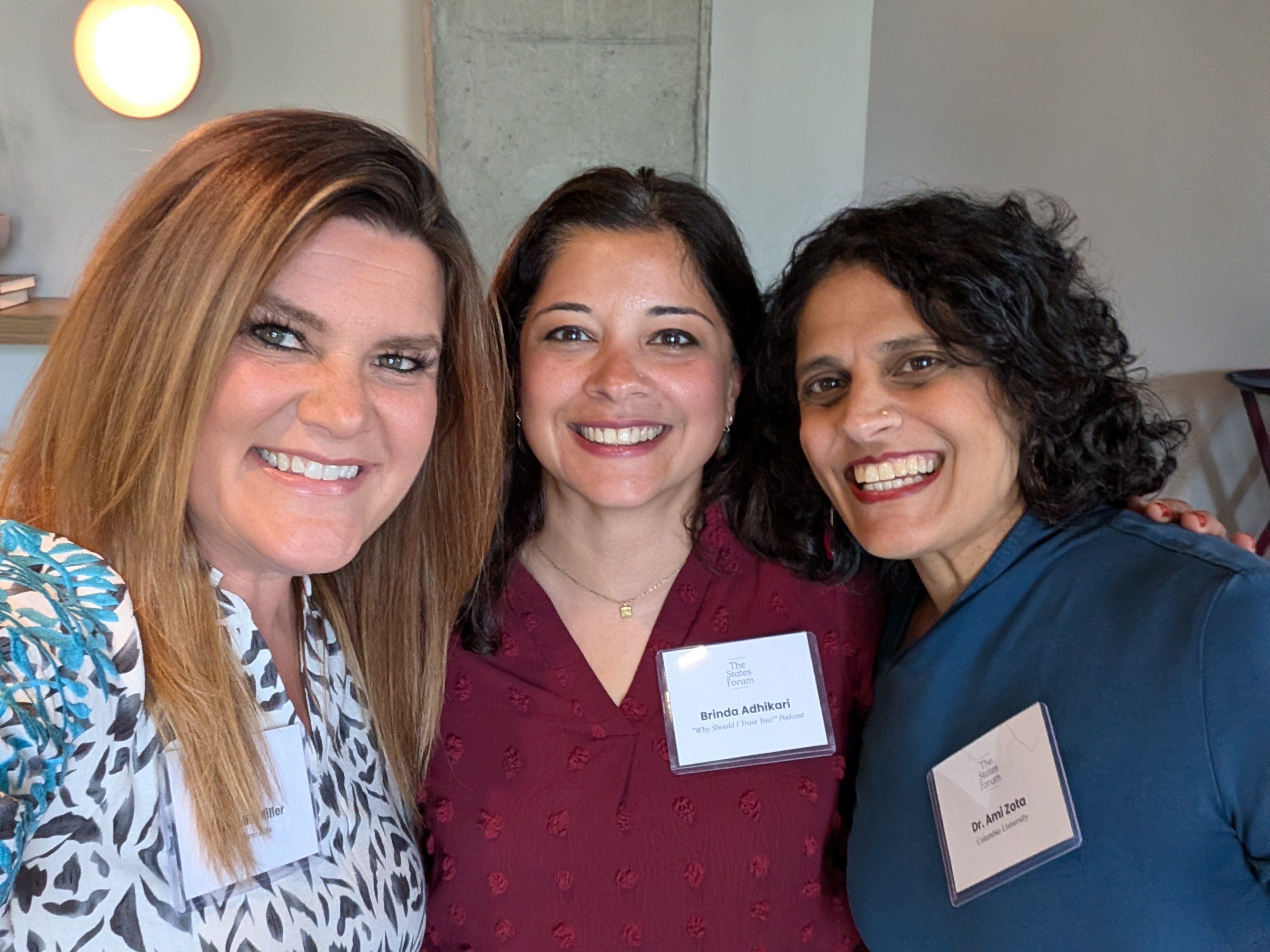
I won’t pretend that we came up with radical new policy solutions that will save the world. But I came out with new relationships, new ideas, and a renewed sense of energy — especially about what we’re building for the next Agents of Change cohort, and how we plan to embed fellows in locally-oriented ecosystems of doers and influencers. Showing impacted communities and decision-makers how scientists can be part of the solution will help rebuild trust in science and higher education.
The bigger takeaway was this: we’re not going to find answers by going to more academic conferences and talking to people who are trained like us. We must physically show up in new and different spaces. As scientists, we need to go to community meetings where local issues are being debated. Folks who feel safe to do so, should consider attending MAHA or other coalition events — if not to participate, at least to listen. We must take more risks and consider what collaborations with farmers, podcast hosts, and MAHA moms might look like.
We must build bridges, big and small.
 | A guest post by
|
Such a thoughtful piece! I’ve been reflecting on how, in my academic experience, I’ve been in an environmental public health bubble where everyone around me also has the same concerns // thought process. This piece encourages me to seek out different perspectives, as only with conversation can we find true change!
So true, thank you for sharing Dr. Zota. I’ve gotten to know MAHA folk from another angle - from COVID public health policy, when many felt they were not listened to by academic scientists - and believe you’ve unlocked the recipe for success.
While answers aren’t found in more academic conferences, I believe hearing and sharing more perspectives like yours may improve the academy, helping people involved in public health policy remember the public we serve through participatory processes like the ones you’re finding useful today.
Keep doing amazing things, and good luck with all of it!