Things are lonely for researchers. This community wants to combat that.
Why our program – and this newsletter – is changing.

Many of you don’t know this, but this program wouldn’t exist if it weren't for the beaches of Costa Rica.
Back in 2019, our founder, Dr. Ami Zota, had packed her life away to live for a year in Costa Rica, while on sabbatical. Years before, when she became an assistant professor at George Washington University, she began asking why she was one of the only women of color scientists in environmental health speaking with the media. The question inspired her to create a fellowship to train young researchers from underrepresented backgrounds in environmental health fields. After getting a pilot grant for the idea, she met with Brian Bienkowski, senior editor at Environmental Health News, who was excited to partner on this project and encouraged Ami to think bigger and to ground the project in storytelling.
And then, in the Fall of 2019, the first cohort launched.
Being in a beautiful place with fewer work distractions and the ability to dive deep into one effort was definitely key to the success, as was the amazing group of fellows who were very open and willing to be part of this creative, exploratory effort.
In the past five years, we’ve accomplished a lot. Some examples of that:
We have trained 57 fellows from 30 U.S. cities who have a wide range of disciplinary expertise.
We have published 62 essays that have reached 1.7 million readers (with around 200,000 reading our Spanish translations.)
Our podcast — where we dive into the career paths and big ideas from fellows and other leaders in the field — has reached more than 80,000 listeners annually on Apple Podcasts, Spotify and SoundCloud.
If you want to learn more, check out our Impact Report!
Now, after five years of training the next generation of impactful environmental health researchers, we decided it was time to deepen our work and reinvest in our existing community.
Why now?
Last year, we were reflecting on our accomplishments and strategizing about new ways to build on them. Then came unprecedented changes in the fields of public health, environmental protection and climate science.
Funding cuts are drying up career paths, fracturing collaborations, and stalling scientific progress.
The stakes have never been higher. Change was unavoidable.
As a result, we reimagined our fellowship and now are launching the Fellows in Residence program. We want to inject new ideas about health and environmental issues into public conversations and we’re more committed than ever to help our fellows become the next generation of thought leaders, bringing their expertise into decision-making spaces.
To achieve these redefined goals, our reimagined fellowship gathers Senior Agents of Change fellows who will participate in key networking opportunities, personalized mentorship to develop policy goals for their research, refine their science communication skills, and more.
But before we continue, let’s address the elephant in the room:
Why is this newsletter a Substack now?
We’ve been itching to communicate in a more collaborative way– especially now, when many researchers want to create a sense of community to navigate the uncertain landscape.
In this newsletter, we will dig deeper into the careers of our community. We’ll feature interviews with past fellows about how they managed major professional milestones – such as testifying before Congress or participating in investigative journalism – and share behind-the-scenes stories about their research and how they overcame hurdles along the way. You’ll hear about their views on policy, the state of environmental health research, and how they’re moving collaborations forward despite the current political climate.
You can expect to hear from us in your inbox every month.
We want this newsletter to feel like a community. Feel free to message us with ideas about what content you'd like to see in your inbox.
Now, let’s get back on track. Why a residence program?
We want to provide our community with the knowledge, skills, networks, and connections necessary to navigate this complex landscape.
This new initiative will build and strengthen alliances and collaborations with other programs, institutions and media organizations, provide support and networking to help fellows navigate opportunities where they and their research can lead conversations in their respective fields, amplify our fellows’ expertise, and help them develop community and policy resources that can be incorporated into decision-making by policymakers.
How is it different to the previous version of the fellowship?
The six fellows in residence will have the opportunity to work on a project of their choosing to broaden the impact of their research. Fellows will select projects, such as op-eds, fact sheets, policy briefs, and videos, that align with their current work and interests.
Who are the Fellows in Residence?
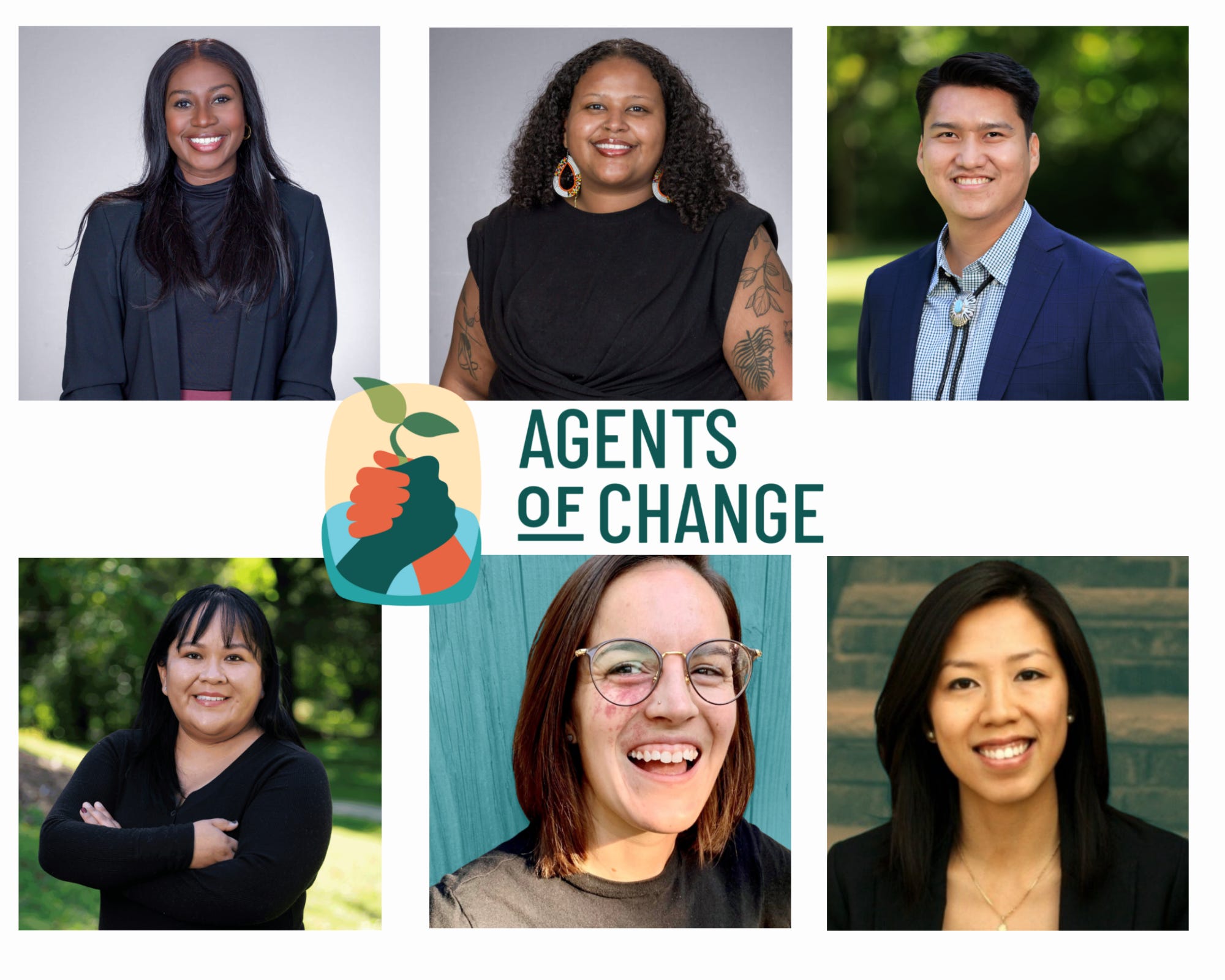
Timnit Kefela (ትምኒት ከፈላ) (2024 fellow)
Timnit’s goal is to understand the sources, pathways and fates of microplastics in cities and coastal environments so we can design interventions that mitigate their impact with communities’ input.
Ufuoma Ovienmhada (2024 fellow)
Ufuoma’s current work focuses on the environmental burdens facing communities impacted by incarceration and the climate crisis.
Kevin P. Patterson (2022 fellow)
Kevin, a citizen of the Navajo Nation, investigates how heavy metal exposures (uranium, arsenic, etc.) in public and private drinking water supplies impact people across the US, with a special focus on historically marginalized Indigenous and rural communities.
Valerisa Joe-Gaddy (2022 fellow)
A citizen of the Navajo Nation, Valerisa spends her days developing and validating new methods to assess microbial water quality and translating science to Tribal communities.
April Ballard (2021 fellow)
April wants to understand how social context (e.g., stigma, poverty) and environmental conditions (e.g., resources, water quality) influence behaviors and health outcomes, specifically focusing on children, women/girls, and those experiencing houselessness.
MyDzung Chu (2019 fellow)
MyDzung works with Asian American communities to assess their environmental risk factors for gestational diabetes, and to understand the impacts of extreme heat and air pollution in Boston's Chinatown.
Learn more about our fellows in our launch post!
Finally, if you take one thing from this newsletter, let it be this:
We want to nurture the community we have built and, together, create the change that will lead to a healthy environment for everyone.
Did you like this newsletter? Do you have an idea of what you’d like to see here moving forward? Let us know — we really want to hear from you!